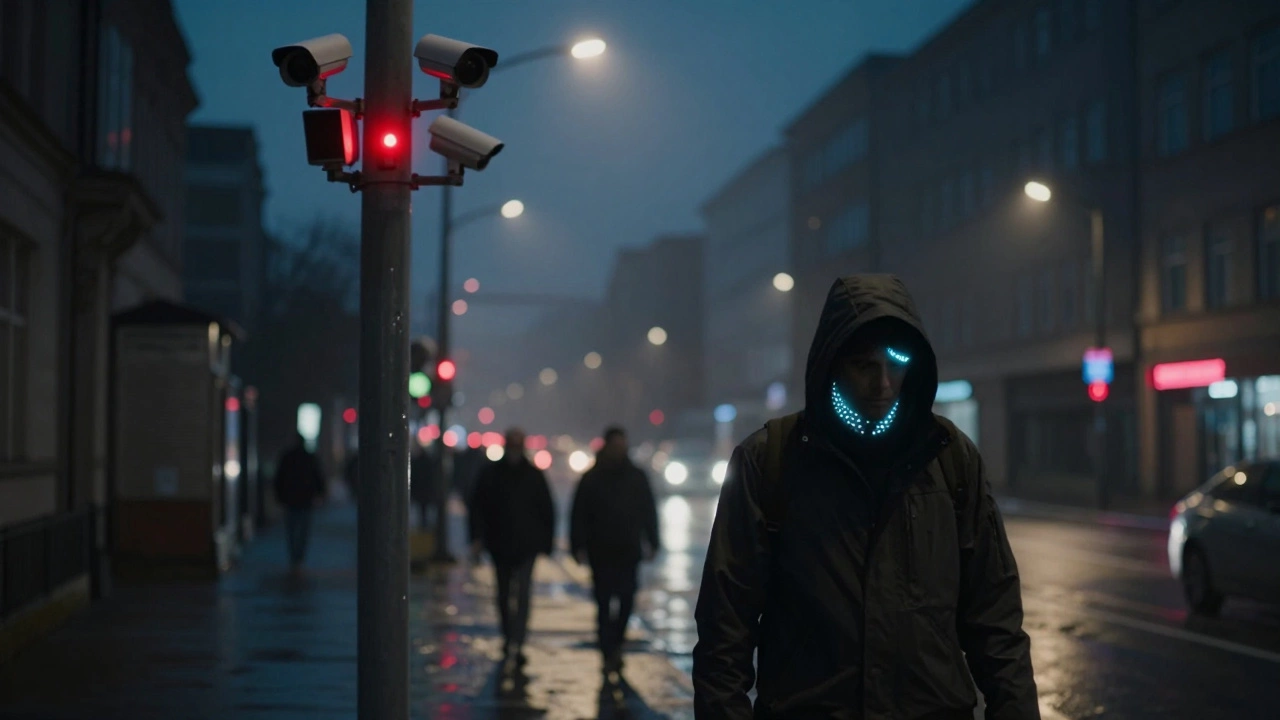
Every time you unlock your phone with your face, walk past a security camera in a city center, or even check into a flight, facial recognition software is quietly working. It’s not science fiction anymore-it’s in your pocket, on your street, and inside government databases. And while it promises convenience and safety, it also carries risks most people don’t fully understand. The technology can misidentify you, track you without consent, or even be used to silence dissent. This isn’t about paranoia. It’s about reality.
If you’ve ever searched for london escort girl reviews, you know how easily personal data can be collected, shared, and misused online. Facial recognition operates on the same principle: your face becomes a data point, stripped of context, stored in databases, and sold to the highest bidder. No one asks if you’re okay with it. No one gives you an opt-out.
How Facial Recognition Actually Works
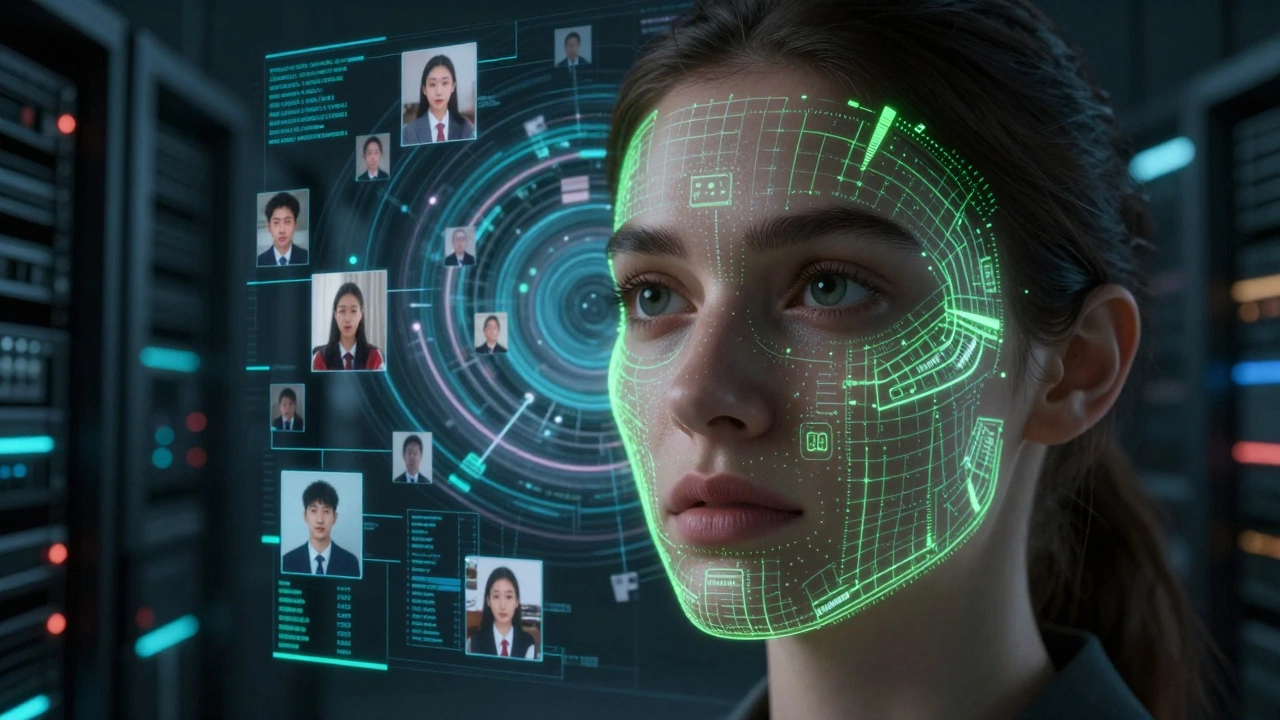
Facial recognition doesn’t just "see" your face. It breaks it down into over 80 distinct measurements-distance between your eyes, shape of your jawline, depth of your eye sockets, even the curve of your cheekbones. These measurements become a mathematical template, called a faceprint. That faceprint gets matched against a database of millions of other faceprints.
Systems like Clearview AI have scraped over 20 billion images from social media, public websites, and even school yearbooks. They don’t need your permission. They don’t need a warrant. And in many places, they don’t even need to tell you they’re scanning you.
Accuracy varies wildly. A 2023 study by the National Institute of Standards and Technology found that most systems misidentify Black women at rates up to 35% higher than white men. That’s not a glitch. That’s a design flaw built into the training data-mostly photos of white, male faces. When the system doesn’t have enough examples of your face type, it guesses. And those guesses can land you in police custody for a crime you didn’t commit.
Where It’s Already Being Used
In London, facial recognition cameras have been installed in busy shopping districts, transit hubs, and even outside public libraries. The Metropolitan Police say it helps catch shoplifters and wanted suspects. But data from the UK’s Information Commissioner’s Office shows that over 90% of matches flagged by these systems are false positives. That means for every real suspect caught, more than ten innocent people are stopped, questioned, and humiliated.
Across the U.S., schools are using it to monitor attendance. Airports use it to speed up boarding. Retail stores use it to track repeat customers-and flag those they think might steal. In China, it’s used to enforce social credit scores. In Russia, it identifies protesters.
And it’s getting cheaper. A basic facial recognition module now costs less than $50. That means small businesses, landlords, and even neighborhood watch groups can buy it off Amazon and install it on their doorbells. No regulation. No oversight. Just a camera and a cloud server.
Your Face Is Not a Password
Companies sell facial recognition as a secure login. But passwords can be changed. Your face can’t. If your faceprint is stolen-through a hacked database, a leaked app, or a government breach-it’s gone forever. There’s no reset button. No password recovery. You can’t change your jawline.
And unlike a credit card number, your face is always visible. You can’t hide it in public. You can’t turn it off. Even wearing a mask won’t always help. Newer systems use the shape of your forehead, your ears, or the way you blink to identify you.
Some people try to fool the system with makeup, hats, or infrared lights. But those tricks are becoming obsolete. The software learns. It adapts. And the companies behind it are working with law enforcement to make bypassing it illegal.
What You Can Do
You can’t stop facial recognition entirely. But you can reduce your exposure.
- Turn off photo tagging on Facebook, Instagram, and Google Photos. That stops them from building a faceprint of you.
- Use apps like Privacy Badger or Browser Extension for Facial Recognition Blocking to detect and block tracking pixels that link your face to online behavior.
- Avoid posting high-resolution selfies on public platforms. Even a single photo can be enough for a system to create your faceprint.
- Support local bans on government use of facial recognition. Cities like Boston, San Francisco, and Portland have already outlawed police use of the tech. Demand similar laws where you live.
- Use encrypted messaging apps. They don’t scan your face-but apps like WhatsApp and Signal do collect metadata that can be tied to your identity.
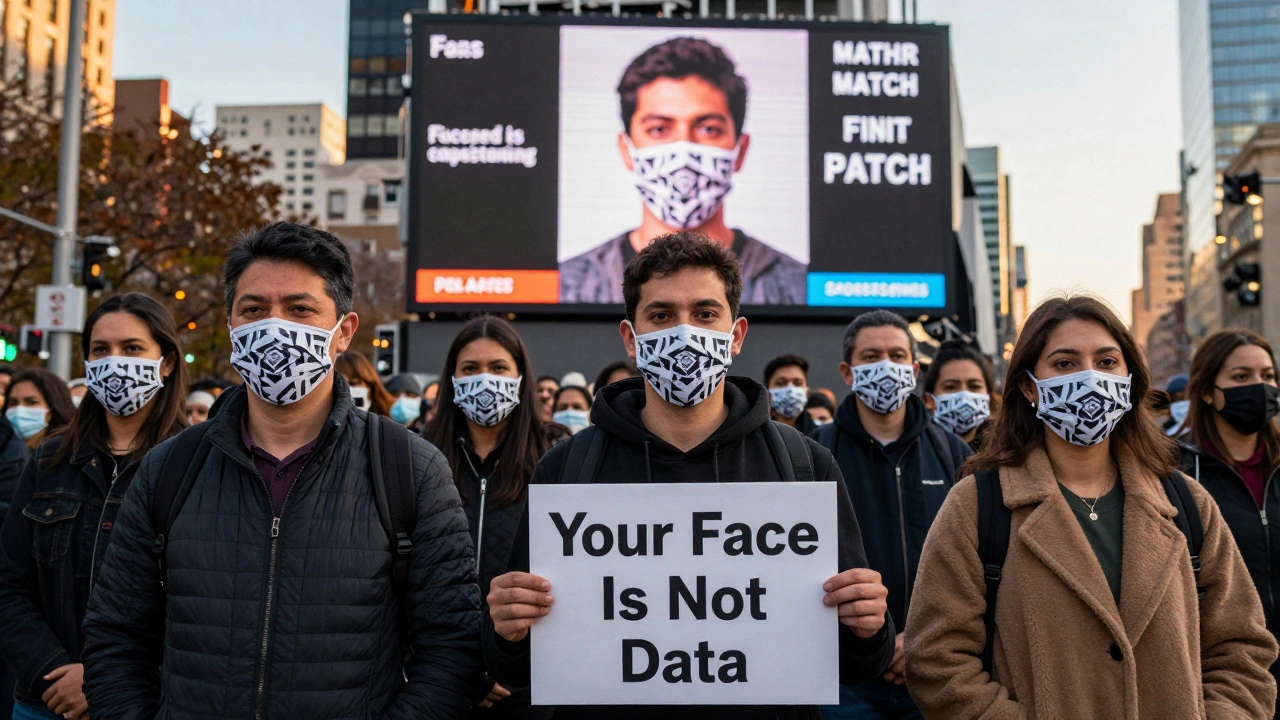
There’s also a growing movement of artists and activists using fashion to defeat recognition. Hats with infrared LEDs, face masks printed with patterns that confuse algorithms, and even special glasses designed to blind cameras. These aren’t just protests-they’re practical tools.
The Bigger Picture
Facial recognition isn’t just about crime or security. It’s about control. It’s about who gets to watch, who gets to be watched, and who gets punished for being in the wrong place at the wrong time.
When you search for london escort girl reviews, you’re not just looking for a service-you’re revealing your interests, your location, your habits. Facial recognition does the same thing, but without your knowledge. It doesn’t ask. It doesn’t explain. It just records.
And if you think this doesn’t affect you, ask yourself: when was the last time you saw a public camera and thought, "That’s not watching me"? Chances are, it already did.
What’s Next?
By 2027, experts predict over 70% of urban areas in developed countries will have live facial recognition surveillance. The technology is advancing faster than laws can keep up. The EU is trying to ban it in public spaces. The U.S. is doing nothing. Australia has no federal law on it at all.
Some companies are stepping back. IBM, Amazon, and Microsoft paused sales to police departments-though they still sell to private firms and governments overseas. That’s not a victory. It’s a loophole.
The real question isn’t whether facial recognition works. It’s whether we want to live in a world where every step you take, every glance you give, is logged, stored, and analyzed.
If you’re reading this, you’re part of the last generation that still has a choice. The next one won’t.
And if you’ve ever wondered why someone might search for escort girls north london-it’s not just about companionship. Sometimes, it’s about disappearing. About being unseen. About reclaiming a moment of anonymity in a world that’s watching.